
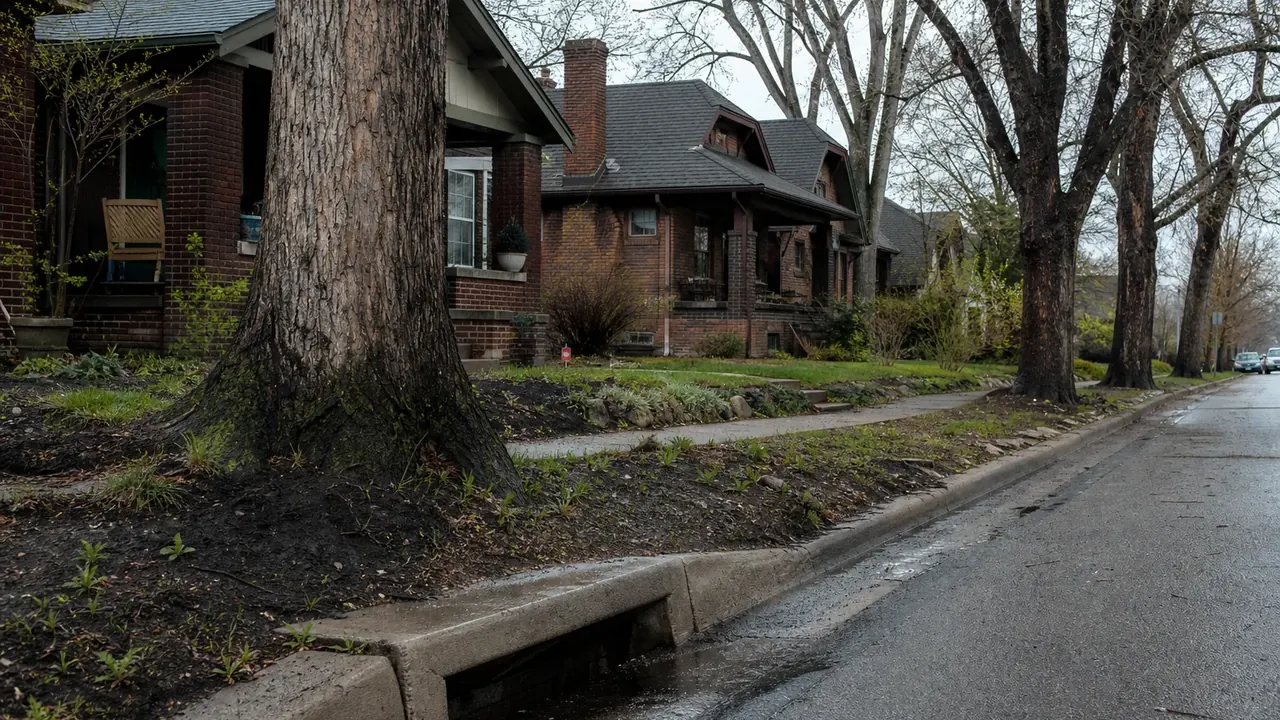
Drain companies across the Denver metro know March is coming before homeowners do. Root-related main line calls cluster as soil temperatures rise and street trees resume aggressive growth toward leaking clay joints. If you have been ignoring a faint gurgle since January, spring is when it becomes a backup. Denver Drain Cleaners sees the same seasonal spike on clay laterals.
The biology is simple
Roots seek water and nutrients. A cracked or jointed clay lateral leaks both. Dormant roots in winter still exist; growth accelerates in spring. A partial restriction that handled winter flow fails when roots expand and household water use shifts, more laundry, more showers, garden hoses pressurizing lines differently.
Neighborhoods most affected
Pre-1960 blocks with mature Siberian elms, cottonwoods, and silver maples, Wash Park, Park Hill, Montclair, older Lakewood and Arvada streets, see the pattern repeatedly. Newer PVC areas get a different spring profile: less root, more runoff-related lateral stress if pipes were poorly bedded.
Early signals worth acting on
- Main floor toilet slow to clear with faint gurgle in tub
- History of March clogs in prior years
- Cleanout dampness or odor after rain
Addressing a partial restriction before backup saves emergency pricing and keeps wastewater out of finished basements.
What clearing involves
Main-line cabling with a root cutter opens flow. It is maintenance, not cure, when roots enter through joints. Some homeowners schedule preventive root cutting yearly; others camera first to see joint condition. Teams doing regular rooter work in Denver can quote based on cleanout access and distance, the two variables that move price most.
Not every slow drain is roots
Spring also brings saturated soil around compromised laterals. Groundwater infiltration adds volume. Camera and history distinguish root mass from belly holding water. Do not assume, verify before paying for the wrong repeat visit.